
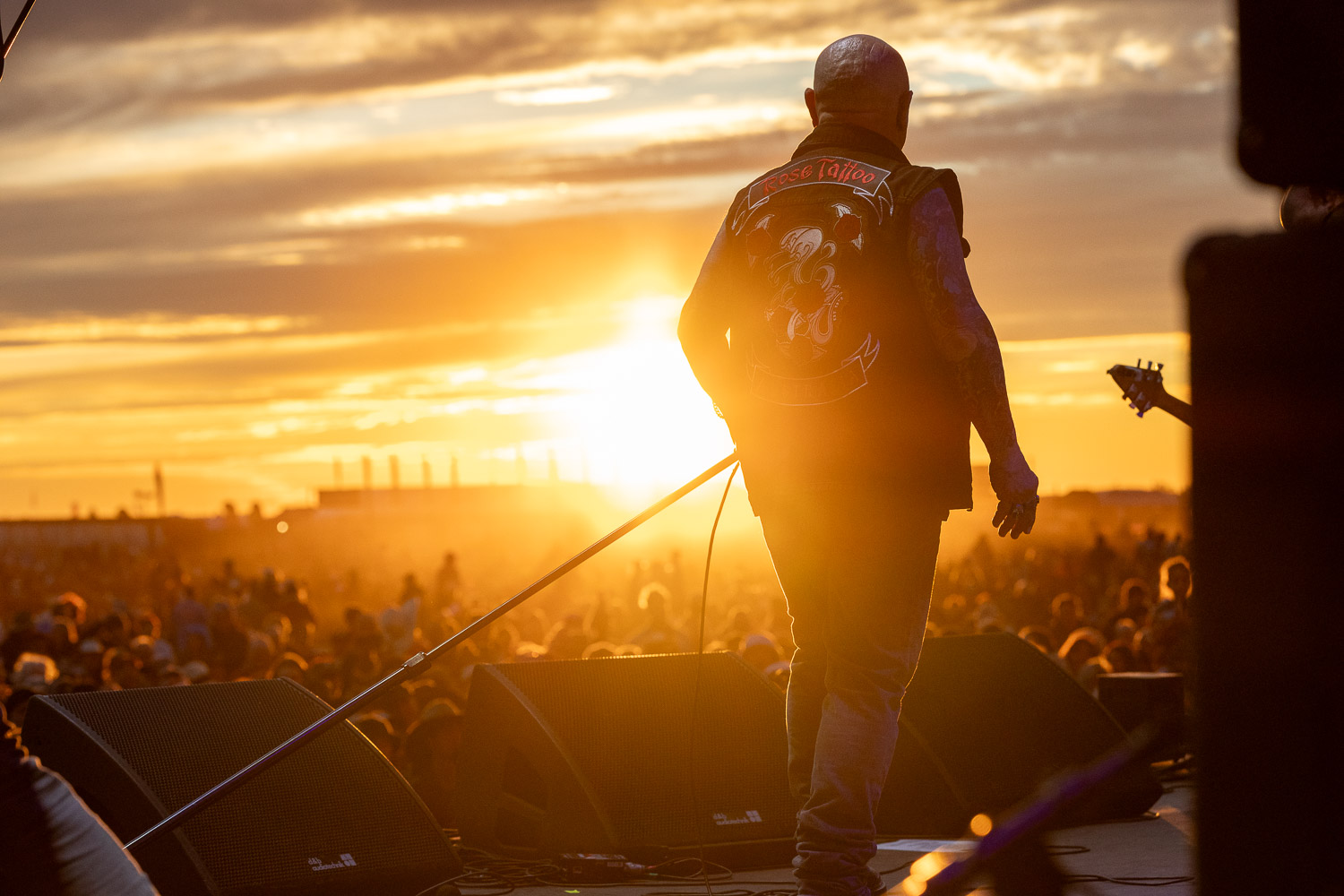
There are some voices that become part of the soundtrack of a country — and Gary “Angry” Anderson had one of those voices.
The unmistakable frontman of Australian rock legends Rose Tattoo, Anderson has died aged 79, leaving behind a remarkable musical legacy that stretched across five decades and reached generations of Australians and music lovers around the world.
His family and Rose Tattoo announced that Anderson died on the eve of Monday, 21 September 2026, surrounded by his loved ones in Australia.
In a statement released on Wednesday, 23 September, the Anderson family and Rose Tattoo said:
“It is with great sadness we announce the passing of Gary ‘Angry’ Anderson on the eve of Monday 21 September 2026, surrounded by his loved ones here in Australia.”
They described him as a “devoted father” and a much-loved bandmate, friend and member of the wider music and entertainment community, adding that his loss would be deeply felt by those who knew and loved him both in Australia and overseas.
The family and band have asked for privacy and said they will not be giving interviews as they take time to grieve.
They concluded their statement with words that feel particularly fitting for a man who lived so much of his life on his own terms:
“Stay young, grow strong.”
THE RISE OF AN AUSTRALIAN ROCK ICON
Born Gary Stephen Anderson in Melbourne, Anderson became one of the most recognisable figures in Australian rock.
Before Rose Tattoo, he was part of Melbourne band Buster Brown, which also featured future AC/DC drummer Phil Rudd. But it was in 1976, when Rose Tattoo was formed in Sydney, that the Anderson persona and that unmistakable gravelly voice would become permanently etched into Australian music history.
Rose Tattoo quickly established itself on the Australian pub-rock circuit, developing a raw, blues-influenced hard-rock sound that was impossible to ignore.
Songs including “Bad Boy for Love,” “Rock ’n’ Roll Outlaw,” “Nice Boys” and “We Can’t Be Beaten” became part of the fabric of Australian rock, while Anderson’s powerful stage presence made him one of the country’s great frontmen.
The band’s influence travelled well beyond Australia. Rose Tattoo became an important influence on American rockers including Guns N’ Roses, who helped bring the band back together for Australian shows in the early 1990s.
Rose Tattoo was later inducted into the ARIA Hall of Fame in 2006, recognising the band’s enduring contribution to Australian music.
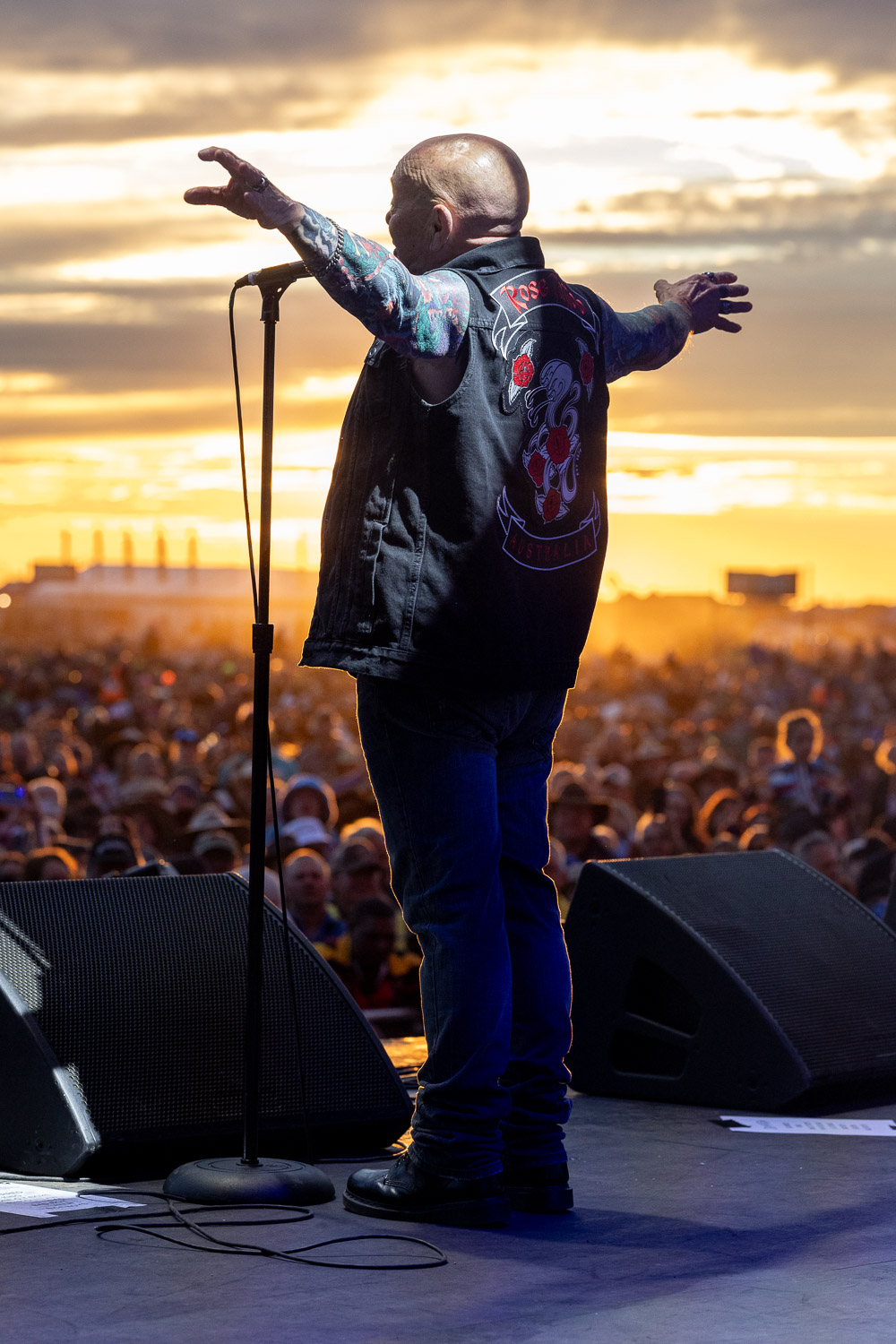
FROM ROCK OUTLAW TO A VERY DIFFERENT SIDE OF ANGRY
What made Anderson’s career particularly interesting was that the man audiences first knew as the tattooed, bald-headed, hard-rocking frontman went on to reveal many different sides of himself.
He moved into acting, most memorably appearing as Ironbar Bassey in Mad Max Beyond Thunderdome in 1985. He also appeared in television and theatre and became a familiar personality beyond the music stage.
And then came one of the great surprises of his career.
In 1987, Anderson released “Suddenly”, a romantic ballad that was worlds away from the hard-rock sound of Rose Tattoo. The song became internationally successful and was famously used as the soundtrack to the wedding of Scott and Charlene, played by Jason Donovan and Kylie Minogue, on Neighbours.
Suddenly, the man with the rock-and-roll reputation had become connected with one of Australian television’s most memorable romantic moments.
It was another reminder that there was much more to Angry Anderson than the image.
A LIFE BEYOND MUSIC
Anderson also became known for his work with young people and as a social commentator. He was appointed a Member of the Order of Australia in 1992 for his work as a youth advocate, adding another dimension to a career that had already moved far beyond the concert stage.
That is perhaps why his passing has resonated so strongly.
For some, he was the unmistakable voice of Rose Tattoo.
For others, he was the man behind Suddenly.
For film audiences, he was Ironbar Bassey.
For television viewers, he became a familiar Australian personality.
And for many who encountered him personally, he was simply Angry — a larger-than-life character whose presence could fill a room.
BMG, which has a long association with Rose Tattoo’s music catalogue, described Anderson as a performer whose distinctive voice and uncompromising performances helped shape Australian rock, while also remembering his warmth, humour and willingness to give his time to others.
A FINAL CHAPTER WITH ROSE TATTOO
There is something especially poignant about the timing of his passing.
2026 was Rose Tattoo’s 50th anniversary year, with the band undertaking what had been planned as a final run of performances. Anderson had continued performing and connecting with audiences well into his later years.
His final chapter was therefore still connected to the music that had defined so much of his life.
The stage was where Australians first met Angry Anderson — and where generations continued to celebrate him.
Now the music remains.
The records remain.
The memories remain.
And somewhere, no doubt, “Bad Boy for Love,” “We Can’t Be Beaten,” “Nice Boys” and “Suddenly” will be playing for fans who grew up with those songs and for younger generations discovering them for the first time.
Gary “Angry” Anderson was much more than a rock singer.
He was part of the Australian story — part of the era when pub rock became a powerful expression of who we were, part of the country’s entertainment history, and a performer who could turn a microphone and a stage into something unforgettable.
His passing marks the end of an extraordinary chapter.
But the voice will live on.
Rest peacefully, Angry.
Stay young. Grow strong.
Our thoughts are with his family, friends, Rose Tattoo bandmates and everyone who loved and admired him.
Hush Hush Entertainment News extends its deepest condolences to the Anderson family and Rose Tattoo.
Photo credits Matt Williams
