
An eight-figure philanthropic proposition and fresh details about the Cultural Olympiad’s timeline have emerged as Queensland’s arts leaders turn their attention to the cultural ambitions of Brisbane 2032.
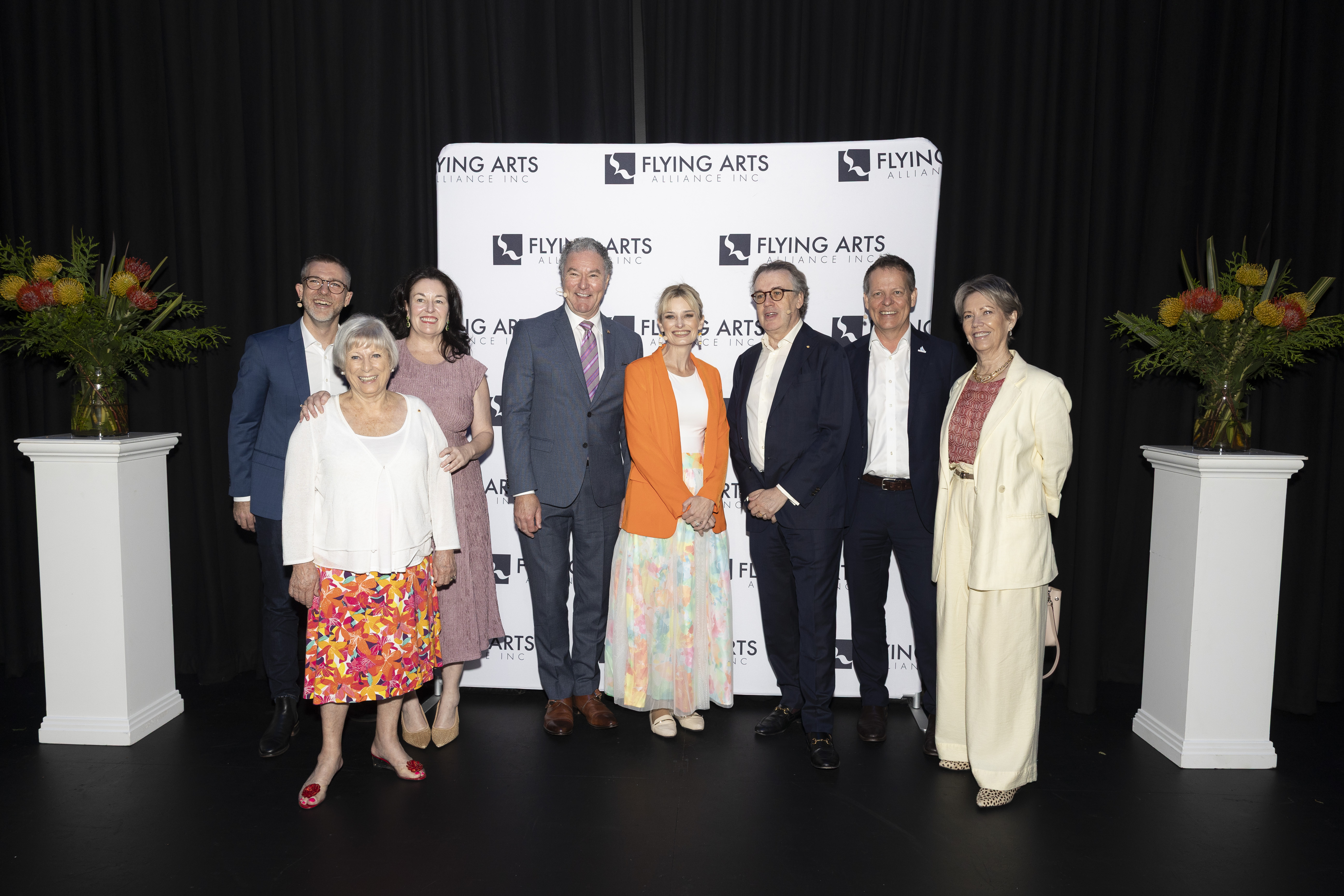
With the Olympic and Paralympic Games less than six years away, some of the state’s most influential arts leaders, philanthropists and creative minds gathered at QPAC’s Cremorne Theatre on Wednesday 28 October for Talk by Flying Arts – Arts & Culture in Queensland.
The discussion, presented by Flying Arts Alliance and moderated by ABC Radio Brisbane’s Craig Zonca, brought together Minister for Education and the Arts Hon John-Paul Langbroek MP, Brisbane 2032 Director of Community Affairs Dominique Lamb, internationally renowned festival director Jonathan Mills and Council of Mayors (SEQ) CEO Scott Smith.
Described by Minister Langbroek as Queensland’s largest gathering of arts and cultural leaders, the event offered rare insights into the Cultural Olympiad’s emerging plans, sparking spirited debate about who will shape it, who stands to benefit and what Queensland will have to show for it beyond 2032.
International festival director Jonathan Mills outlined a proposal for an eight-figure philanthropic contribution through a dedicated public–private partnership, with the potential to attract further investment from foreign governments seeking to showcase their cultures on the world stage.
“The world is waiting for us to show some leadership here,” Mills said, proposing a cultural program built around the Olympic tradition of truce and the extraordinary diversity of Queensland’s multicultural communities.
“We can no longer take for granted our multicultural success,” he said, pointing to the Cultural Olympiad as an opportunity to strengthen connections between communities and celebrate the cultures that have shaped the state.
Brisbane 2032’s Dominique Lamb shed light on the Cultural Olympiad’s timeline, indicating that detailed planning would accelerate following the Los Angeles 2028 Games, with a focus on reflecting the diversity of Queensland’s host communities.
Minister Langbroek also expressed confidence in Queensland’s creative sector and its capacity to deliver a world-class cultural program.
“We’ve got the people here to do it,” he said.
With Brisbane 2032 set to be the most geographically dispersed Games in Olympic history, regional participation and grassroots engagement emerged as central priorities, alongside opportunities for arts education, Pacific cultural exchange and equitable representation across artforms.
Council of Mayors (SEQ) CEO Scott Smith urged Queensland’s creative sector to seize the opportunity rather than wait for government or Games organisers to determine its involvement.
“Don’t sit back and be complacent about leveraging the Games to your benefit,” he said.
For Mills, the ambition extends well beyond the Games themselves, pointing to Barcelona’s Olympic legacy as a benchmark and challenging Queensland to think expansively about its creative future.
“Let’s reimagine this state as a creative forcefield,” he said.
Flying Arts Alliance CEO Toni Palmer said the discussion highlighted the importance of ensuring the Cultural Olympiad creates opportunities across the state.
“Flying Arts was founded on the belief that where you live should never determine your access to the arts. More than 55 years later, that principle is just as relevant as we consider what Brisbane 2032 could mean for regional, rural and remote Queensland,” Ms Palmer said.
“The ambition is clearly there. The challenge now is turning these big ideas into meaningful opportunities for artists, educators and communities across Queensland, and ensuring the cultural legacy of 2032 is felt long after the Games have finished.”
Talk by Flying Arts is an ongoing panel series bringing together artists, leaders and changemakers for thought-provoking conversations about the ideas, opportunities and challenges shaping Queensland’s cultural future.
For more information, visit flyingarts.org.au.
