
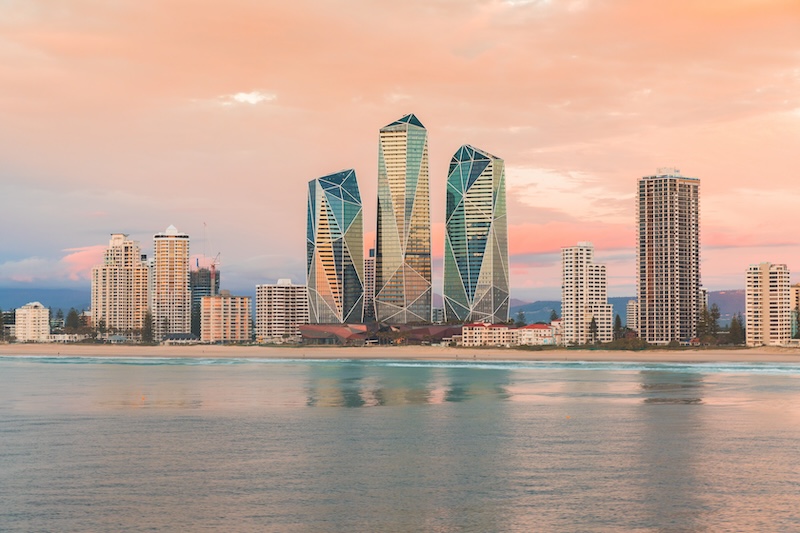
The Gold Coast has cemented its position as Australia’s largest non-capital city economy, with new figures revealing the city’s economy has grown by an impressive 25 per cent since 2020/21 to exceed $55 billion.
The findings are detailed in the newly released State of the City Report 2026, which highlights the Gold Coast’s transformation into one of the nation’s most dynamic and diverse economic centres. The report shows the city is growing faster than Greater Brisbane and has outpaced the average growth rate of Australia’s capital cities over the past five years.
Adding to its growing influence, the Gold Coast now ranks second nationally for Economic Complexity, behind Sydney, reflecting the sophistication and diversity of industries driving the city’s future.
Released by the city’s investment and economic development agency, Invest Gold Coast, the report paints a picture of a city entering a new phase of economic maturity, powered by key sectors including health, advanced manufacturing, education, technology, screen production, marine industries, professional services and exports.
Gold Coast Mayor Tom Tate said the results confirm the city’s reputation as one of Australia’s most ambitious and opportunity-focused economies.
“The Gold Coast economy continues to grow at an incredible pace,” Mayor Tate said.
“The Gold Coast has built a reputation as the city that says yes. We say yes to investment, yes to opportunity and yes to people who want to build something.”
Today, the city is home to more than 690,000 residents, supports over 350,000 jobs and boasts more than 83,000 businesses. It also generates approximately $19 billion in exports annually, with advanced manufacturing emerging as the largest contributor.
One of the standout findings of the report is the growing strength of the knowledge economy and health and wellbeing sectors, which together contribute more than $13 billion to the local economy and support over 70,000 full-time equivalent jobs.
The report also highlights the city’s increasing presence in future-focused industries, including aerospace, defence and space technology. A notable example is Gilmour Space Technologies, which recently became the first Australian commercial company to attempt an orbital launch from the Bowen Orbital Spaceport in North Queensland, using a rocket designed and built on the Gold Coast.
Creative industries are also playing an increasingly important role. Screen and game production now contributes more than $420 million annually to the local economy and has grown by more than 77 per cent since 2020/21. Major projects such as HOTA – Home of the Arts, Shadowbox Studios, Miami Arts Depot and the future Gold Coast Arena are helping reshape the city’s cultural and economic landscape.
The Gold Coast’s physical transformation is equally striking. A record 75 cranes are currently active across the city, while more than $23 billion worth of major development projects are underway.
Invest Gold Coast Chair Will Hodgman said the city’s success is being driven by a more resilient and diversified economic base.
“What is happening on the Gold Coast is the result of industries with long-term, high-growth potential,” Mr Hodgman said.
“This is no longer a secondary Australian economy. The Gold Coast is becoming a globally connected city with deeper capability across health, knowledge and creative industries, advanced manufacturing, technology and exports.”
As the city continues to evolve, the Gold Coast is increasingly being recognised for far more than its beaches and tourism appeal. The State of the City Report suggests a region undergoing one of the most significant economic transformations in Australia, with investment flowing into advanced manufacturing, health, technology, education and creative industries.
Major infrastructure projects, expanding industrial precincts and growing international export capability are helping reshape the city’s identity, while attracting skilled workers, entrepreneurs and investors from around the country and overseas.
The Gold Coast Health and Knowledge Precinct at Southport remains a centrepiece of that transformation. Bringing together more than $5 billion in health, research, education and innovation infrastructure, the precinct is strengthening the city’s reputation as a destination for medical research, biotechnology and future-focused industries.
At the same time, projects including the Coomera Marine Precinct, the Yatala-Stapylton Industrial Precinct and the future Gold Coast Arena are expected to play a significant role in driving the next chapter of growth.
With the population forecast to surpass one million residents by 2046, the report paints a picture of a city that is not simply growing in size but expanding its influence nationally and internationally. Once viewed primarily as a tourism destination, the Gold Coast is now emerging as one of Australia’s most diverse and economically sophisticated urban centres.
