
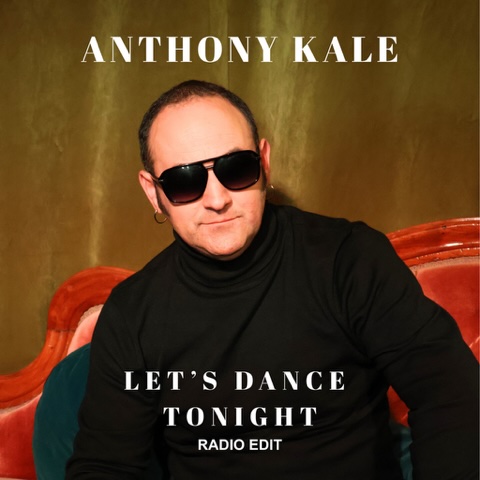
ANTHONY KALE
HUSH HUSH BIZ SINGLE REVIEW
Let’s Dance Tonight
Dance music has always carried a promise larger than its vocabulary. The words are usually simple: come out, stay late, move your body, don’t go home. But beneath those phrases is an older bargain—the idea that for a few hours, rhythm can suspend the rules of ordinary life. Work ends. Streets brighten. Strangers become a crowd. Time becomes measured in beats instead of obligations. Anthony Kale’s Let’s Dance Tonight enters that tradition without apology. The Australian pop-dance artist has spent the last decade developing a sound shaped by theatrical pop figures including Kiss, Elvis Presley and Michael Jackson, and those influences matter less as references than as a shared belief in transformation. Each understood performance as an event, a temporary world with its own laws. Kale brings that instinct into contemporary dance-pop, filtering the grand colour of the 1980s through modern EDM structure. Let’s Dance Tonight begins by reaching upward. The chord progression suggests arrival before the beat has fully settled in; then the rhythm locks, vocal chants begin circling the title, and the song quickly becomes less about an individual voice than a collective impulse. Friday night is not simply mentioned.
It becomes the song’s setting, almost its mythology: the few hours in which release still appears possible. That may sound like a modest idea, but popular music has built entire cultures from less. Written by Kale and Salvatore Panetta and produced by Panetta, the song is constructed around repetition as invitation. The hooks do not merely decorate the track; they create participation. The repeated call to dance narrows the distance between singer and listener until the chorus begins to sound communal rather than declarative. Yet there is a small flicker of something more vulnerable beneath the surface. The refusal to go home suggests that the night matters precisely because it cannot last. Celebration gains emotional weight from its deadline. That tension is what gives the track more life than its bright surfaces initially suggest. Randy Merrill’s mastering supplies the scale: the song has the gloss and separation of a contemporary crossover release, but its deeper appeal lies in something older and almost primitive—the drum as summons, the chorus as gathering place.
